
AUTISM SPECTRUM DISODER
Executive Summary
Autism Spectrum Disorder (ASD) is a neurodevelopmental condition with a complex, multifactorial etiology involving both genetic and environmental components. While no single gene causes autism, advances in molecular diagnostics—particularly Next-Generation Sequencing (NGS)—have identified over 100 high-confidence risk genes that can inform a patient's clinical profile. In this post, Consultant Medical Geneticist Lina Osama Zaki Quteineh discusses the genetic architecture of ASD, the clinical utility of comprehensive gene panel testing, and what families in the UAE should consider when pursuing genomic analysis for developmental delays.
"In my practice, I emphasize that genetic testing for autism is not about finding a single 'smoking gun.' It is about piecing together a biological puzzle. A comprehensive gene panel helps us identify specific molecular pathways that are disrupted, which can guide medical management, predict potential co-occurring conditions like seizures, and provide families with a clearer understanding of recurrence risks in future pregnancies."
— Lina Osama Zaki Quteineh
The Genetic Architecture of Autism Spectrum Disorder: Clinical Insights for UAE Families
Decoding the Complex Genetics of ASD
Autism Spectrum Disorder (ASD) is a heterogeneous group of neurodevelopmental conditions characterized by challenges in social interaction, communication, and restricted or repetitive behaviors. The prevalence of ASD has increased globally, with the UAE reporting similar trends to international figures, prompting a greater focus on early diagnosis and intervention .
The underlying causes of ASD are complex. While environmental factors play a role, genetics are a cornerstone. Twin and family studies have consistently demonstrated high heritability, suggesting a strong genetic influence. However, it is crucial to understand that ASD is not caused by a single gene mutation in most cases. Instead, it involves a combination of genetic variations—from common single nucleotide polymorphisms (SNPs) to rare, highly penetrant mutations.
Genetic Mechanisms: From De Novo to Inherited Variants
The genetic landscape of ASD can be divided into several categories:
- De Novo Variants: These are new mutations that arise spontaneously in the germline of a parent and are not inherited. They are a significant contributor to ASD, particularly in simplex families (where only one child is affected).
- Inherited Variants: These can be autosomal dominant, autosomal recessive, or X-linked. Copy number variations (CNVs), which involve deletions or duplications of large segments of DNA, are also a well-established risk factor.
- Polygenic Risk: A combination of many common genetic variants, each with a small effect, can increase the overall susceptibility to ASD.
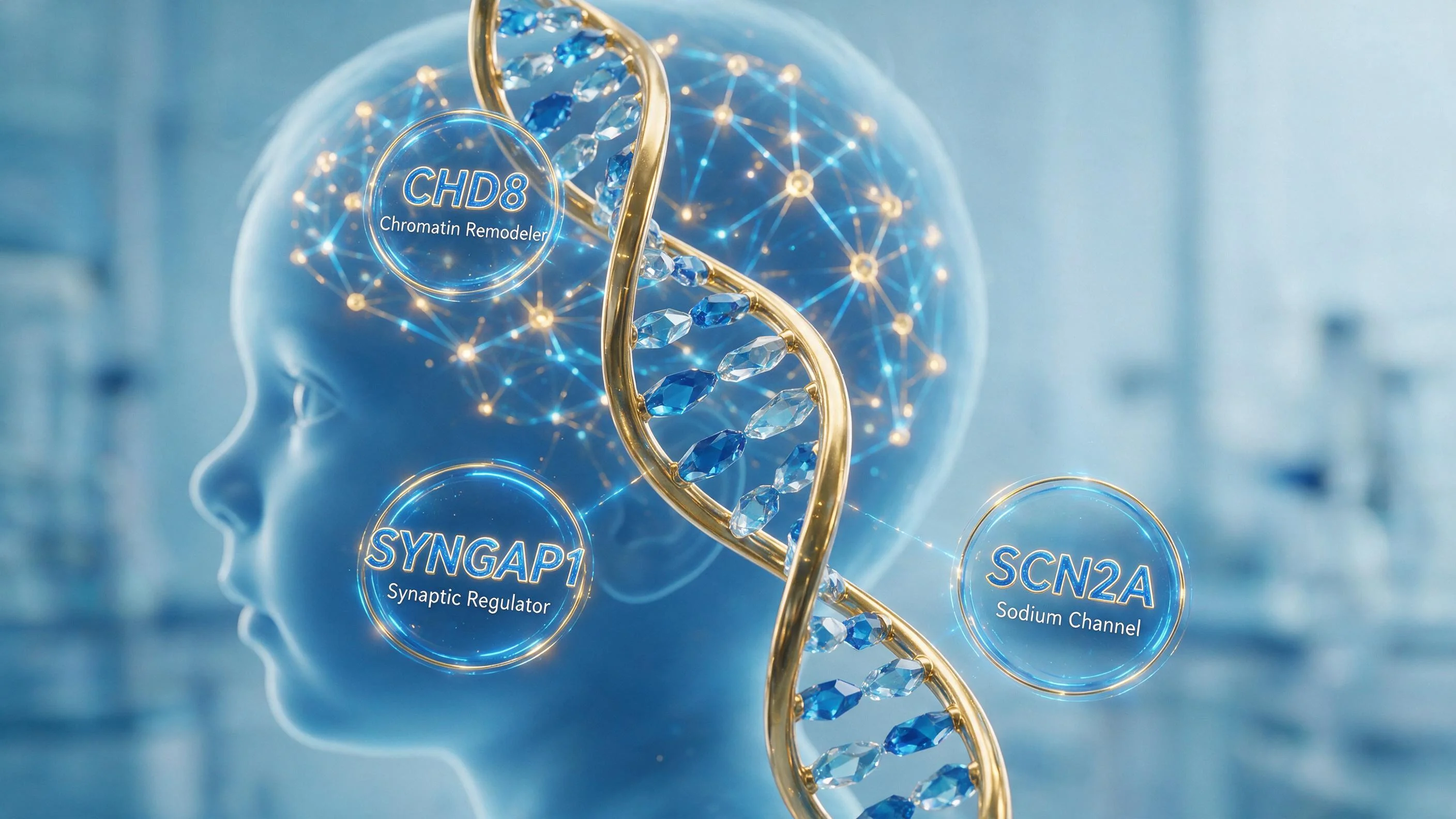
High-confidence genes associated with ASD are often involved in synaptic function, chromatin remodeling, and neuronal development. For example, genes like CHD8, SYNGAP1, and SCN2A are frequently implicated and have distinct clinical phenotypes that can guide management .
Why Consider a Genetic Panel for Autism?
A targeted genetic panel, such as the Autism Gene Panel Test, offers several clinical advantages over traditional chromosomal microarray analysis (CMA). While CMA is often the first-tier test, it has limitations in detecting small mutations within genes. Next-Generation Sequencing (NGS) overcomes this by providing a high-resolution view of the exome or specific gene regions.
Precision in Diagnosis
Identifies mutations in genes like MECP2, FMR1, or SHANK3 that may mimic or co-occur with ASD.
Medical Management Guidance
Findings can predict comorbidity risks (e.g., seizures in SCN2A carriers) and influence medication choices.
Informed Family Planning
Clarifies recurrence risks for parents and siblings, facilitating genetic counseling.
Access to Clinical Trials
A precise genetic diagnosis may open doors to targeted therapies or research studies.
What to Expect from a Clinical Genetic Test
The journey begins with a clinical evaluation by a specialist, followed by genetic counseling to discuss the implications of testing. The lab test itself utilizes Next-Generation Sequencing (NGS) technology to analyze a curated list of genes associated with ASD. At DNA Labs UAE, the process is governed by strict protocols for sample integrity and data security, operating under the regulatory oversight of the Dubai Health Authority (DHA) and in compliance with Federal Decree-Law No. 41 of 2024 .
Important Note: While this panel looks for pathogenic variants, it does not guarantee a diagnosis for all individuals. A negative result does not rule out autism but rather indicates that the genetic cause is not among the specific genes tested, highlighting the complex nature of the condition.
Navigating the Genetic Landscape of Autism
The UAE's Commitment to Advanced Diagnostics
The UAE has positioned itself as a regional hub for medical innovation, with significant investments in molecular diagnostics and laboratory infrastructure . DNA Labs UAE adheres to the highest standards of data governance as outlined in the Federal Decree-Law No. 45 of 2021 on Personal Data Protection and the UAE CDS Law 2026, ensuring that your genetic data is handled with the utmost confidentiality and localized security .
As a parent or caregiver in the UAE, understanding the genetic underpinnings of autism can be empowering. It transforms the diagnostic journey from a passive observation of symptoms to an active pursuit of biological insights that can shape a more personalized care plan.
Medically Reviewed by Dr. Dr. Ajay Singh
DHA Licensed in Clinical Medicine
All content on DNA Labs UAE is reviewed by qualified medical professionals to ensure accuracy and compliance with clinical guidelines.
⚕️ Medical Disclaimer
This article is for informational purposes only and does not constitute medical advice. Always consult with a qualified healthcare professional for diagnosis and treatment.
Found this helpful? Book a test or consult our team.