
Breast Cancer BRCA1 & BRCA2 Gene Test in UAE
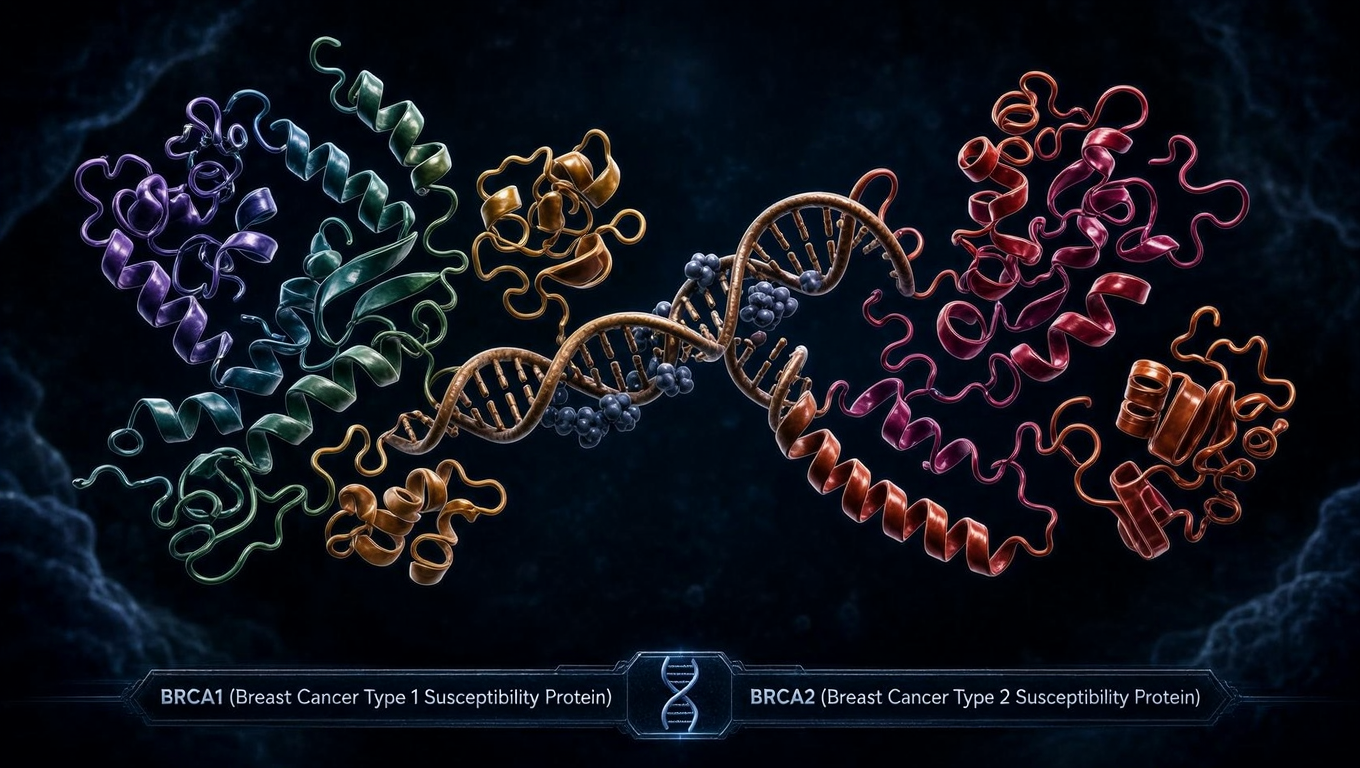
Beyond the Genes: The Clinical Reality of BRCA1 & BRCA2 in the UAE Population
Physician Insight
"In the UAE, we are seeing a distinct genomic landscape. The prevalence of BRCA1/2 pathogenic variants in our cancer cohorts is significant, and critically, we are identifying population-specific variants that are not commonly found in Western databases. This isn't just about knowing your risk; it's about understanding your specific genetic profile in the context of our region's unique hereditary patterns and high consanguinity rates."
When we discuss the Breast Cancer BRCA1 & BRCA2 Gene Test in the UAE, we are not just talking about a laboratory analysis. We are talking about a deeply personal roadmap that can define a person's medical future. While the fundamental biology of the BRCA1 and BRCA2 genes is consistent globally—they are tumor suppressor genes responsible for repairing damaged DNA—the clinical application and interpretation of these tests in the UAE carry a unique weight.
Recent local research and clinical data reveal that the genetic architecture of breast cancer risk in the UAE population has distinct characteristics that demand a personalized approach, extending far beyond a simple positive or negative result.
Prevalence of P/LP BRCA variants in UAE cancer cohorts
Younger median age of diagnosis compared to Western populations
P/LP variant rate in high-risk family screening cohorts
The UAE's Distinct Genetic Tapestry
One of the most critical takeaways from recent UAE-based studies is the existence of population-specific BRCA1 and BRCA2 variants. Research analyzing cohorts from Dubai and across the Emirates has identified novel pathogenic and likely pathogenic (P/LP) variants that are distinct from those commonly documented in European or North American databases .
For example, the BRCA1 c.4065_4068del and BRCA2 c.2808_2811del variants have been identified with allele frequencies up to ten times higher in the Emirati population than in global reference datasets . The prevalence of these founder mutations, combined with a high rate of consanguinity (20–50% in some Arab countries), creates a unique genetic environment where inherited risk factors are both more concentrated and more complex .
"The high consanguinity rates in the region mean that we can expect geographically restricted, distinct BRCA1/2 variants. This emphasizes why population-specific genomic data is not a luxury, but a necessity for accurate risk assessment in the UAE."
Why Testing Criteria in the UAE Are Different
The clinical guidelines for who should undergo BRCA testing in the UAE, as outlined by the Department of Health (DoH), are particularly aggressive compared to some international standards, reflecting the earlier onset and distinct presentation of cancer here .
- Earlier Age of Onset: Genetic counseling and testing are indicated for individuals diagnosed with breast cancer at or before 50 years of age . This is critical because the median age of breast cancer diagnosis in the UAE is significantly younger—by nearly a decade—than in Western populations .
- Triple-Negative Breast Cancer (TNBC): Testing is automatically recommended for any breast cancer diagnosis that is triple-negative, a subtype more frequently associated with BRCA1 mutations .
- Consanguinity as a Risk Factor: The DoH guidelines explicitly list "Positive Consanguinity" as an indication for genetic testing, acknowledging the increased probability of inheriting recessive or concentrated genetic variants .
- Male Breast Cancer: Any case of male breast cancer warrants testing, as it is a strong indicator of a hereditary syndrome .
These criteria are not just academic; they are designed to catch high-risk individuals early. A study at Cleveland Clinic Abu Dhabi found that the rate of pathogenic or likely pathogenic germline variants in Emirati patients with a family history of breast or ovarian cancer was 17%, which is higher than in similar European or North American cohorts .
Managing Your Risk: A Clinical Pathway
Identifying a BRCA mutation is not an endpoint; it is the beginning of a proactive clinical journey. The DoH guidelines provide a clear, tiered management strategy for carriers .
Enhanced Surveillance
- Age 25-29: Annual breast MRI.
- Age 30-75: Annual mammogram AND breast MRI with contrast.
- For Men: Clinical breast exams starting at 35; consider mammograms for BRCA2 carriers at 50.
Risk-Reducing Options
- Risk-Reducing Mastectomy (RRM): Discuss reconstruction options and degree of protection.
- Risk-Reducing Salpingo-Oophorectomy (RRSO): Typically recommended between 35-40 for BRCA1 carriers; can be delayed to 40-45 for BRCA2 carriers.
- Chemoprevention: Discuss risk-reduction agents.
The Critical Role of Variants of Uncertain Significance (VUS)
Not every mutation is clearly a danger signal. A significant proportion of test results return as a Variant of Uncertain Significance (VUS). This means the genetic change has been identified, but it is not yet known whether it increases cancer risk.
In the UAE studies, VUS rates were significant, accounting for nearly 5% of findings in cancer cohorts and over 6% in family screening cohorts . This underscores the importance of genetic counseling. A VUS is not a result to panic about, but it is also not a "negative." It requires expert interpretation, family history correlation, and often, further testing of family members to help reclassify the variant as either benign or pathogenic .
The Path Forward: Precision Prevention
The integration of genomic data into clinical practice in the UAE is accelerating. The Emirati Genome Program (EGP) is analyzing whole-genome sequences from hundreds of thousands of individuals, which will help to pinpoint specific risk profiles for the national population .
This is transforming breast cancer management from a one-size-fits-all approach to one of precision prevention. The goal is to identify high-risk individuals early, implement intensive screening to catch cancer at its most treatable stage, and, if necessary, intervene with risk-reducing surgeries or targeted therapies like PARP inhibitors—which are specifically effective in cancers with BRCA mutations .
Next Steps: Empowering Your Health Journey
Understanding your genetic predisposition is one of the most powerful steps you can take for your long-term health, especially in the context of the UAE's unique genetic landscape. It allows you to move from uncertainty to action with a clear, clinically guided plan.
If you are concerned about your risk—whether due to a family history of cancer, a personal history of early-onset cancer, or simply a desire to understand your genetic health—the Breast Cancer BRCA1 & BRCA2 Gene Test provides the foundational data you need.
Medically Reviewed by Dr. Shatha Janabi
DHA Licensed in Clinical Medicine
All content on DNA Labs UAE is reviewed by qualified medical professionals to ensure accuracy and compliance with clinical guidelines.
⚕️ Medical Disclaimer
This article is for informational purposes only and does not constitute medical advice. Always consult with a qualified healthcare professional for diagnosis and treatment.
Found this helpful? Book a test or consult our team.