
Phenylketonuria (PKU) Genetic Test in UAE
Executive Summary
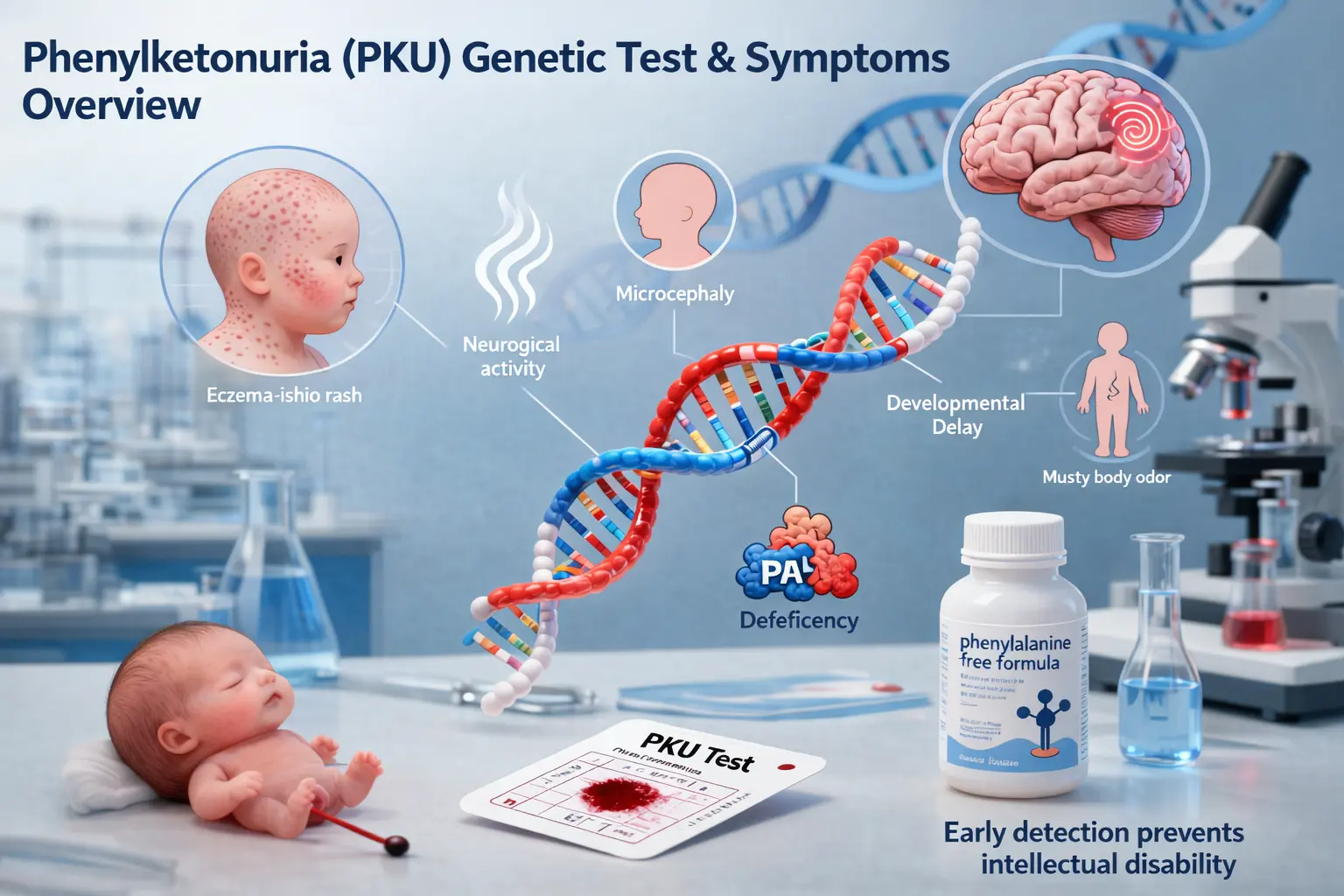
Phenylketonuria (PKU) is a treatable inherited metabolic disorder caused by mutations in the PAH gene, leading to toxic accumulation of phenylalanine. Early detection through newborn screening is mandated in the UAE, where the prevalence is approximately 1 in 20,000 live births . This blog explores the clinical importance of genetic testing, the science behind the PAH gene, and the importance of lifelong management to prevent neurological damage, reflecting the UAE's comprehensive national screening program.
Physician Insight
"As a Consultant Medical Genetics, I often counsel families who are navigating the unknowns of a new PKU diagnosis. The anxiety is palpable. However, I emphasize that PKU is a profoundly manageable condition. The goal of genetic testing is not just to confirm a diagnosis, but to empower families with the knowledge needed to make informed decisions about dietary management and long-term care. Here in the UAE, we have the infrastructure and expertise to ensure these children grow up healthy and without the neurological complications we once associated with this disorder."
— Lina Osama Zaki Quteineh | Consultant Medical Genetics | DHA Registration ID: 9294403
Phenylketonuria (PKU) Genetic Test in UAE: What Every Parent Should Know
For many new parents in the UAE, the phrase "newborn screening" is a formality, a routine prick of the heel. But for a small fraction, this simple blood spot test can reveal the presence of Phenylketonuria (PKU), a rare genetic condition. While a diagnosis can be overwhelming, the UAE's robust healthcare system has turned this challenge into a story of successful early intervention.
This article provides a comprehensive overview of PKU and the PAH gene genetic test, outlining why early detection is critical, what the test involves, and how families in the UAE can manage this condition effectively .
Understanding PKU: The Body's Inability to Process Protein
Phenylketonuria is an inherited disorder that affects how the body breaks down a specific amino acid called phenylalanine. Amino acids are the building blocks of protein, and phenylalanine is found naturally in many foods, including meat, eggs, dairy, and nuts .
In a healthy individual, an enzyme called phenylalanine hydroxylase (PAH) converts phenylalanine into another amino acid, tyrosine, which is necessary for creating hormones, neurotransmitters, and melanin. However, individuals with PKU have a deficiency or complete lack of this PAH enzyme.
The Science Behind the PAH Gene
The PAH gene provides the blueprint for producing the phenylalanine hydroxylase enzyme. Mutations in this gene prevent the enzyme from functioning correctly . This causes phenylalanine to accumulate in the blood and brain to toxic levels, leading to severe neurological damage, intellectual disabilities, and other health problems if left untreated .
The UAE's Mandatory Newborn Screening Program
The United Arab Emirates has a highly proactive approach to managing genetic diseases. The Ministry of Health and Prevention (MOHAP) operates a comprehensive National Newborn Screening Program that screens all newborns for a panel of genetic and metabolic disorders, including Phenylketonuria .
According to Dubai Health Authority (DHA) standards, screening for PKU is obligatory as per Federal Law, ensuring that every child born in the UAE is tested within the first few days of life . The goal is to identify affected infants before they develop symptoms, allowing for immediate intervention and a significantly improved prognosis .
Prevalence of PKU in the UAE
The UAE has made significant strides in public health and genetic screening. Data from the National Newborn Screening program between 2000 and 2016 shows that the prevalence of classical PKU in the UAE is approximately 0.005% to 0.008%, equating to roughly 1 in 14,000 to 1 in 20,000 live births . A 2014 study reported a prevalence of 0.0068%, with 51 cases identified among 750,365 newborns, reflecting the effectiveness of the national screening efforts .
Historical data from the National Screening Center in Tawam Hospital indicates an incidence of 1 in 14,430 births, highlighting the importance of continued vigilance and early intervention for families with a history of metabolic disorders .
The PAH Gene Genetic Test: What to Expect
If a newborn's heel-prick test suggests a potential metabolic issue, or if a family has a history of PKU, a definitive diagnostic test is required. This is typically the PAH gene genetic test, available at specialized laboratories like DNA Labs UAE.
This is a comprehensive DNA test that sequences the entire PAH gene using Next-Generation Sequencing (NGS) technology . NGS allows for the simultaneous analysis of multiple genes to identify mutations with high precision.
Test Components & Method
- Sample Type: The test requires a simple blood sample or extracted DNA .
- Technology: It utilizes NGS technology, offering high diagnostic sensitivity and accuracy .
- Turnaround Time: Results are typically available within 3 to 4 weeks .
Pre-Test Considerations
Before undergoing the test, providing the clinical history of the patient is essential. Genetic counseling is highly recommended to draw a pedigree chart of family members who may be affected, which aids in accurate diagnosis and treatment planning .
Lifelong Management and Treatment in the UAE
A diagnosis of PKU is not a sentence of intellectual disability; it is a call to action. Treatment for PKU is a lifelong journey centered on dietary management. The primary goal is to keep phenylalanine levels within a safe range.
Management strategies include:
- Dietary Restriction: A strict low-protein diet that restricts phenylalanine intake from natural sources .
- Medical Foods: Consumption of Phe-free amino acid supplements and special low-protein foods to ensure proper nutrition and growth .
- Monitoring: Regular monitoring of blood phenylalanine levels to adjust the diet accordingly and prevent toxic buildup .
The UAE government has prioritized the inclusion of PKU treatment in its healthcare system, ensuring access to necessary medications and medical foods, helping to alleviate the financial burden on families .
Long-Term Health Outcomes
Research shows that with proper dietary management, PKU patients can achieve normal physical development. A recent study involving patients across multiple countries found that patients with PKU exhibited normal growth patterns, while emphasizing that lower phenylalanine and natural protein intake were correlated with lower height and higher BMI, respectively .
Expert Care and Genetic Counseling
Navigating a PKU diagnosis requires a multidisciplinary approach. In the UAE, institutions like SEHA Tawam Hospital provide dedicated pediatric metabolic genetics departments, offering comprehensive care for children with inherited metabolic disorders .
As a Consultant Medical Genetics, I often counsel families who are navigating the unknowns of a new PKU diagnosis. The anxiety is palpable. However, I emphasize that PKU is a profoundly manageable condition. The goal of genetic testing is not just to confirm a diagnosis, but to empower families with the knowledge needed to make informed decisions about dietary management and long-term care. Here in the UAE, we have the infrastructure and expertise to ensure these children grow up healthy and without the neurological complications we once associated with this disorder.
Medically Reviewed by Dr. Dr. Ajay Singh
DHA Licensed in Clinical Medicine
All content on DNA Labs UAE is reviewed by qualified medical professionals to ensure accuracy and compliance with clinical guidelines.
⚕️ Medical Disclaimer
This article is for informational purposes only and does not constitute medical advice. Always consult with a qualified healthcare professional for diagnosis and treatment.
Found this helpful? Book a test or consult our team.