
Hantavirus: Causes, Symptoms, Diagnosis, Treatment, and Prevention | A Complete Medical Guide
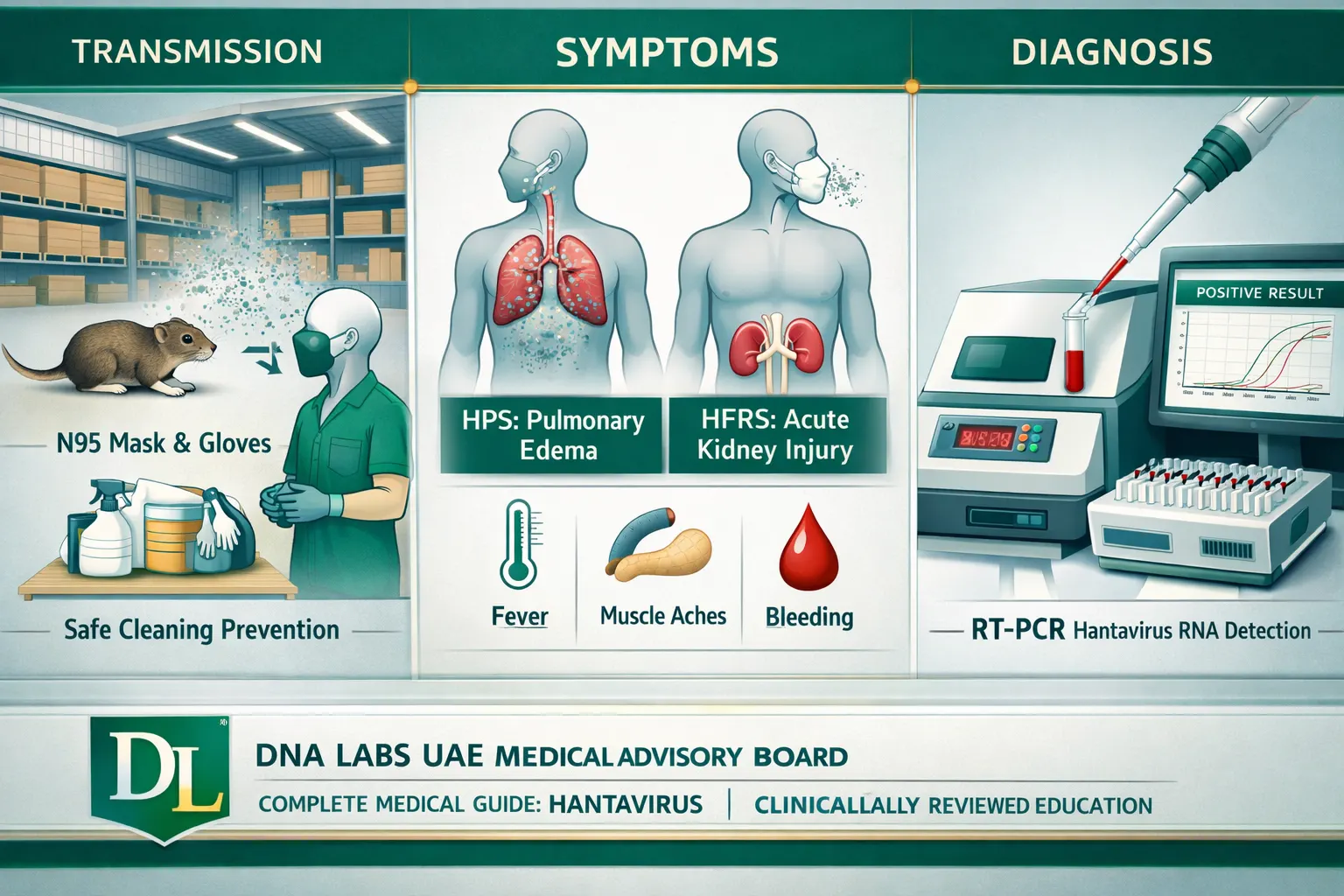
"The insidious nature of Hantavirus lies in its transmission mechanism. Patients often have no distinct memory of a rodent bite or scratch because the virus is inhaled through aerosolized dust containing microscopic traces of rodent urine or droppings. In environments like warehouses, agricultural sites, or recently opened storage units, a simple sweep of a broom can launch viral particles directly into the respiratory tract. In my practice across the UAE, I have observed that the overlap between early Hantavirus symptoms and common febrile illnesses frequently delays the single most critical step: ordering the correct molecular test."
Hantavirus: Causes, Symptoms, Diagnosis, Treatment, and Prevention | A Complete Medical Guide
A clinically reviewed educational resource bridging environmental exposure risks, subtle prodromal symptoms, and the urgency of molecular diagnostics for this life-threatening zoonotic infection.
Executive Summary
Hantaviruses represent a group of severe zoonotic pathogens transmitted primarily through the aerosolized excreta of infected rodents. Unlike many prominent viral threats, human-to-human transmission is exceptionally rare, making environmental exposure the primary vector for infection. Depending on the specific viral strain and geographic region, Hantavirus can manifest as one of two devastating clinical syndromes: Hantavirus Pulmonary Syndrome (HPS) or Hemorrhagic Fever with Renal Syndrome (HFRS). Early intervention and precise molecular diagnostics are paramount, as the initial clinical presentation frequently mimics benign, self-limiting viral illnesses. This guide, authored under the direct supervision of Dr. Lina Osama Zaki Quteineh (DHA ID: 09294403), provides the biological context needed to understand why a Qualitative RNA PCR test is the definitive diagnostic tool in the acute phase of suspected infection.
⚠️Clinical Disclaimer: This is an educational asset intended for top-of-funnel health literacy. It does not list test pricing, booking logistics, or treatment protocols. If you suspect exposure, proceed to the diagnostic test page for specimen requirements and clinical validation data.
The Biological Mechanism: Causes and Transmission
Hantaviruses are RNA viruses belonging to the family Hantaviridae. Each strain of the virus is inextricably linked to a specific rodent host species (such as the deer mouse, white-footed mouse, or cotton rat). The rodents themselves are asymptomatic carriers, shedding the virus chronically in their urine, feces, and saliva. The endothelial tropism of the virus—its affinity for the cells lining blood vessels—is what drives the catastrophic capillary leak syndrome seen in severe cases.
Modes of Infection
1 Aerosolization (Primary)
Inhaling dust contaminated with microscopic rodent droppings or urine. This is an acute occupational hazard for logistics, warehouse, agricultural, and construction workers.
2 Direct Contact (Secondary)
Touching contaminated surfaces and subsequently touching the mucous membranes of the mouth, nose, or eyes without proper hand hygiene.
3 Bites (Rare)
Being bitten by an infected rodent. Though uncommon, direct inoculation through broken skin constitutes a recognized transmission route.
"In environments like warehouses, agricultural sites, or recently opened storage units, a simple sweep of a broom can launch viral particles directly into the respiratory tract." — Dr. Lina Osama Zaki Quteineh, DHA 09294403
Clinical Presentation: Recognizing the Symptoms
The incubation period for Hantavirus typically ranges from one to eight weeks post-exposure. The clinical course is biphasic and can rapidly deteriorate depending on the syndrome. Early recognition during the febrile prodrome is the single most actionable window for diagnostic confirmation.
🫁 Hantavirus Pulmonary Syndrome (HPS)
Predominantly seen in the Americas
Early Phase (Days 1-5)
- Fever and severe fatigue
- Deep muscle aches (especially thighs, hips, back)
- Chills and abdominal distress
Late Phase (Day 4-10+)
- Non-cardiogenic pulmonary edema
- Fluid rapidly fills the lungs
- Severe shortness of breath and sensation of suffocation
- Drastic drop in blood oxygen levels
- Mortality rate can reach up to 38%
🩸 Hemorrhagic Fever with Renal Syndrome (HFRS)
Predominantly seen in Europe and Asia
Initial Phase
- Intense headaches
- Back and abdominal pain
- Fever, chills, and blurred vision
Progressive Phase
- Facial flushing and capillary leakage
- Petechiae or internal bleeding
- Hypotension (low blood pressure)
- Acute kidney injury and renal failure
The Diagnostic Challenge
Because early-stage Hantavirus symptoms closely mimic influenza, COVID-19, or other common viral infections, clinical diagnosis based purely on physical presentation is highly challenging. Waiting for severe pulmonary or renal symptoms to manifest before confirming the pathogen can cost valuable time in the ICU. This is why molecular testing during the febrile window is clinically urgent.
Diagnostic Complexity and Molecular Detection
To circumvent diagnostic delays, modern clinical pathology relies on direct molecular detection of the virus in the early acute phase. The gold standard for this is a qualitative RNA detection test, which identifies the genetic material of the virus circulating in the bloodstream long before the body mounts a detectable, robust antibody response. IgM serology, while widely available, carries a critical temporal flaw: antibodies rarely reach detectable thresholds before day 5-7 of illness, by which time pulmonary capillary leakage may already be radiographically evident.
Advanced Laboratory Screening
For patients exhibiting concerning symptoms with a history of rodent exposure or high-risk occupational environments, direct molecular screening is critical for early clinical management. The Hantavirus RNA Detection (Qualitative) test offered at DNA Labs UAE utilizes Real-Time RT-PCR technology targeting conserved regions of the viral genome, providing definitive evidence of viremia during the critical early window.
For specimen requirements, clinical validation data, and test methodology specifications, please visit the official test page:
Learn More About Hantavirus RNA Detection (Qualitative) →No pricing, booking steps, or operational logistics are displayed on this educational page.
Current Treatment Protocols
There is currently no specific antiviral cure, vaccine, or targeted therapeutic agent specifically approved for Hantavirus infection. Therefore, treatment is primarily supportive and often requires admission to an intensive care unit (ICU).
🫁 For HPS
- Extracorporeal membrane oxygenation (ECMO) may be required to oxygenate the blood if pulmonary edema is severe.
- Intubation and mechanical ventilation are standard for advanced respiratory distress.
🩺 For HFRS
- Management centers on fluid and electrolyte balancing.
- Maintaining blood pressure with vasopressors when indicated.
- Occasionally administering renal replacement therapy (dialysis) until kidney function normalizes.
Clinical Pearl: The efficacy of supportive care is directly proportional to how early the infection is identified, underscoring the necessity of prompt diagnostic evaluation. A negative PCR result within the first 72 hours of fever, combined with careful monitoring of platelet counts, can safely guide the de-escalation of critical care resources.
Prevention and Occupational Safety
With no vaccine available, prevention is strictly reliant on minimizing human-rodent contact and adhering to rigorous environmental safety protocols. These measures are particularly relevant for the UAE's logistics, construction, and agricultural sectors, as well as for families engaging in outdoor recreational activities such as desert camping.
Environmental Control
- Seal all potential entry points in homes, warehouses, and offices (holes larger than a quarter inch).
- Secure food sources, including pet food, in tightly sealed, rodent-proof containers.
- Implement professional pest control measures in high-risk industrial facilities.
Safe Decontamination
- Never dry-sweep or vacuum rodent droppings, as this aerosolizes the virus.
- Saturate droppings, nests, or dead rodents with a 10% bleach solution or commercial disinfectant and let sit for 5 minutes.
- Wear proper PPE (gloves and an N95 respirator) when cleaning previously unoccupied or heavily infested spaces.
"Prevention is not theoretical in the UAE. Whether you are managing a storage facility or planning a family camping trip in the desert, rodent-proofing your environment and knowing the correct decontamination protocol is the only vaccine we have against Hantavirus." — Dr. Lina Osama Zaki Quteineh, DHA 09294403
🧬 Clinical Test Reference: Hantavirus RNA Detection (Qualitative Test)
The clinical information detailed in this guide was authored and reviewed by Dr. Lina Osama Zaki Quteineh (DHA ID: 09294403), General Practitioner. This content is provided for educational purposes as part of DNA Labs UAE's commitment to public health literacy and should not replace emergency medical consultation. If you suspect exposure to Hantavirus and are experiencing acute respiratory distress, seek immediate emergency medical care.
The laboratory methodology utilized for identifying Hantavirus genetic material is based on a Real-Time RT-PCR assay targeting the small (S) RNA segment for pan-Hantavirus detection. The link below directs you to the specimen collection criteria, required sample matrix, and clinical validation specifications.
Authorized by Clinical Governance for dissemination. This document validates the medical accuracy of the pathogen behavior described in the blog post above.
🔗 Access Diagnostic Test Details →Medically Reviewed by Dr. Lina Osama Zaki Quteineh
DHA Licensed in Clinical Medicine
All content on DNA Labs UAE is reviewed by qualified medical professionals to ensure accuracy and compliance with clinical guidelines.
⚕️ Medical Disclaimer
This article is for informational purposes only and does not constitute medical advice. Always consult with a qualified healthcare professional for diagnosis and treatment.
Found this helpful? Book a test or consult our team.