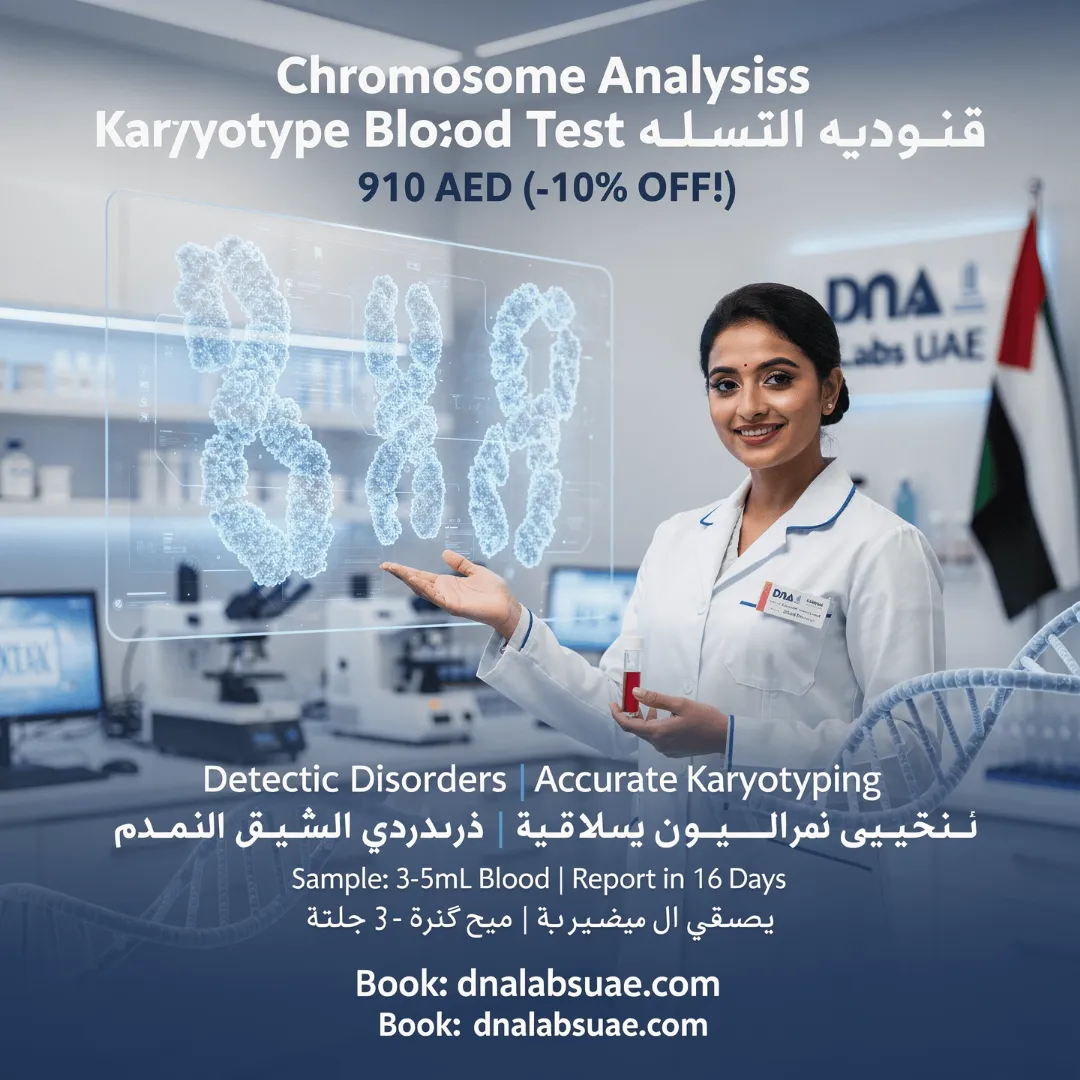


Chromosome Analysis (Karyotype) Blood Test in Dubai & UAE | Accredited Lab | Detects Genetic Disorders
Accurately diagnose genetic conditions, understand causes of infertility, or investigate developmental disorders with a gold-standard Chromosome (Karyotype) Analysis. Performed at our ISO-accredited laboratory in Dubai, this test provides a definitive visual map of your chromosomes for clinical diagnosis.
What is a Karyotype Blood Test?
A karyotype test is a comprehensive genetic analysis that examines the number, size, and structure of your chromosomes under a microscope. Chromosomes carry your DNA, and abnormalities—such as missing, extra, or rearranged pieces—can cause significant genetic disorders, infertility, or recurrent pregnancy loss.
This diagnostic test is a fundamental tool for:
- Clinical Genetic Diagnosis: Confirming suspected genetic conditions.
- Fertility Investigations: Identifying causes of infertility or recurrent miscarriages.
- Developmental & Health Assessments: Evaluating individuals with unexplained developmental delays, intellectual disabilities, or multiple congenital anomalies.
Our Credentials: This complex cytogenetic analysis is performed in-house at our ISO accredited laboratory in Dubai, ensuring the highest standard of diagnostic accuracy and reliability for physicians and patients across the UAE and GCC.
View our official accreditation: ISO Certificate
Key Applications & Who Should Get Tested
A karyotype analysis is typically ordered by a doctor to investigate specific medical concerns.
| Scenario | Purpose of the Test | Common Conditions Ruled In/Out |
|---|---|---|
| Infertility Workup | To identify chromosomal causes of inability to conceive or recurrent pregnancy loss. | Klinefelter Syndrome (XXY), Turner Syndrome (XO), Balanced Translocation. |
| Suspected Genetic Disorder | To diagnose conditions suggested by physical features, developmental delays, or health issues. | Down Syndrome (Trisomy 21), Edwards Syndrome (Trisomy 18), Patau Syndrome (Trisomy 13), Cri-du-chat Syndrome. |
| Family Planning | For individuals with a family history of chromosomal rearrangements or after multiple miscarriages. | Identifies balanced translocations (carrier status) that can affect offspring. |
| Prenatal Diagnosis | (Via amniocentesis or CVS) To assess fetal chromosomes when screening indicates high risk. | Detects major fetal chromosomal aneuploidies and structural abnormalities. |
Why Choose DNA Labs UAE for Your Karyotype Analysis?
| Feature | DNA Labs UAE (Dubai) | Typical Alternatives |
|---|---|---|
| Laboratory & Expertise | In-house ISO 17025 Accredited Lab in Dubai. Analysis performed by specialist cytogeneticists. | Often sent abroad, leading to longer wait times and less direct oversight. |
| Diagnostic Validity | Clinically validated report suitable for specialist consultation and medical decision-making. | May lack the detailed analysis or format required by specialists. |
| Turnaround Time (TAT) | 10-14 days for standard analysis from sample receipt. | Can often take 3-4 weeks or more. |
| Sample Collection | Convenient blood draw at our Dubai facility or arranged at partnered clinics/hospitals. | May require visiting a separate, unrelated lab for collection. |
| Consultation Support | Clear reporting for your physician. Our experts are available for professional consultation. | Limited or no access to the analyzing scientists. |
Our Promise: You receive a precise, internationally recognized diagnostic result from a leading accredited facility in Dubai, supported by clear and actionable reporting for your healthcare provider.
The Testing Process: From Sample to Detailed Report
1. Doctor’s Referral & Sample Collection
The process begins with a referral from your physician. A simple blood sample is drawn from a vein in the arm into a special cytogenetics tube.
2. Cell Culture & Slide Preparation
In our Dubai lab, lymphocytes from the blood are stimulated to grow and divide in a controlled culture. Cells are arrested during division, stained, and placed on slides to make the chromosomes visible.
3. Microscopic Analysis & Digital Karyotyping
Our certified cytogeneticists use high-powered microscopes and advanced imaging software to capture and analyze chromosome images. They arrange the chromosome pairs (1-22, plus X and Y) to create the individual’s unique karyogram.
4. Interpretation & Reporting
An expert reviews the karyogram for any numerical or structural abnormalities. A comprehensive clinical diagnostic report is issued to your referring doctor, detailing the findings and their implications.
For personal genetic insights (ancestry, traits) rather than medical diagnosis, explore our Home DNA Test Kit.
Test Details & Pricing
- Sample Required: 3-5 mL of blood in a sodium heparin (green-top) tube.
- Report Time: 10-14 business days from sample receipt at our laboratory.
- Price: Starting from AED 1,800 (all-inclusive for the full cytogenetic analysis and report).
Note: This test requires a formal request from a registered physician. Pricing is for the laboratory analysis; any separate sample collection or physician consultation fees are not included.
Frequently Asked Questions (FAQ)
Q: What is the difference between a karyotype and a genetic DNA test?
A: A karyotype provides a broad, visual overview of all 46 chromosomes to detect large-scale abnormalities. A genetic DNA test (like sequencing) examines the specific sequence of genes within chromosomes to find smaller mutations. They are complementary tools used for different diagnostic purposes.
Q: Can a karyotype test detect all genetic problems?
A: No. It is excellent for detecting abnormalities involving large pieces or whole chromosomes (like Down Syndrome). It cannot detect very small deletions/duplications or point mutations at the gene level, which require more specific molecular tests.
Q: How accurate is the test?
A: When performed correctly in an accredited lab, karyotyping is considered the gold-standard diagnostic test for chromosomal disorders, with very high accuracy. Our ISO 17025 accreditation validates our entire process, from sample handling to analysis and reporting.
Q: My child needs this test. Is the process different?
A: The laboratory process is identical. For infants or young children, the blood draw volume is adjusted appropriately by the collecting phlebotomist or pediatric specialist.
Q: What does a normal karyotype result look like?
A: A normal female result is reported as 46,XX. A normal male result is 46,XY. The report will include the karyogram image showing 23 normal-looking chromosome pairs.
DNA Labs UAE | Accredited Laboratory in Dubai
Precision Diagnostics for Informed Medical Care.